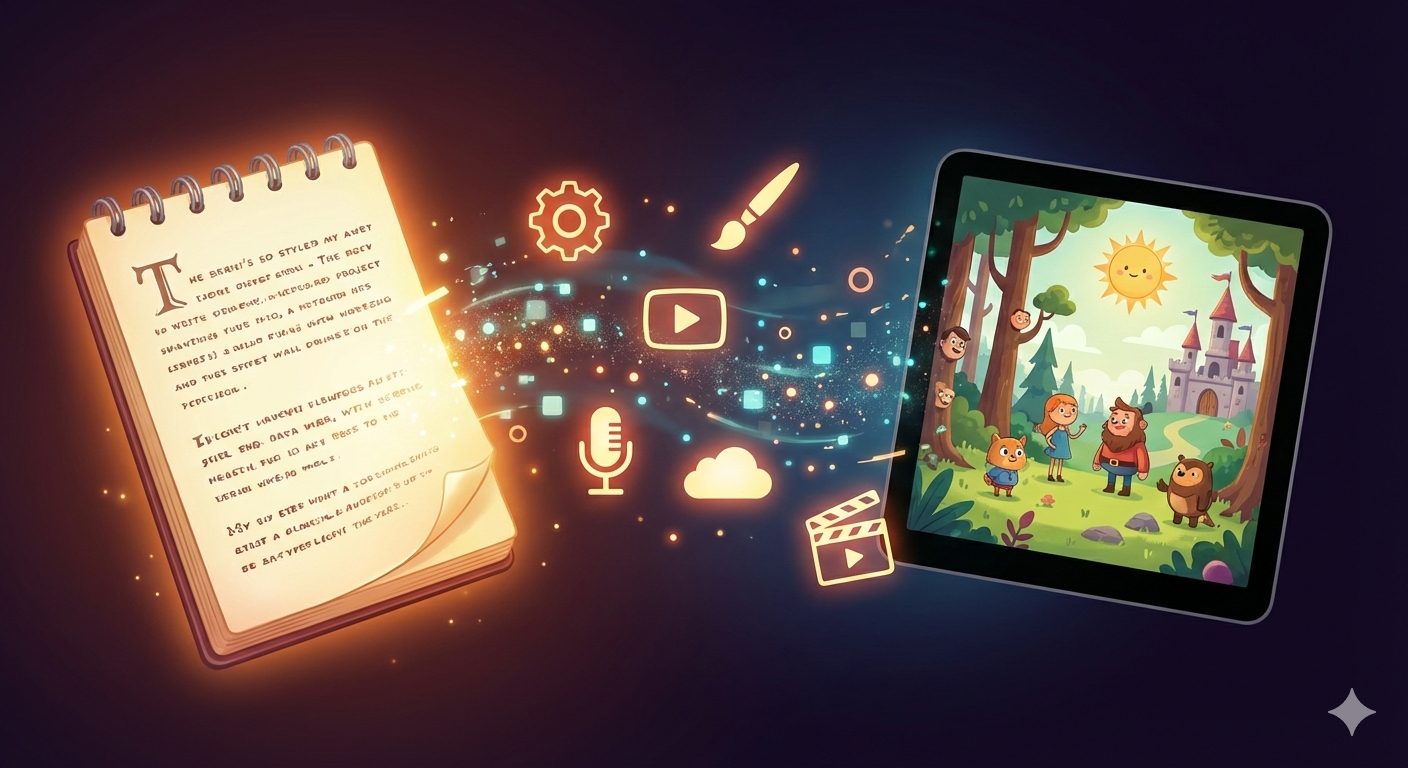
In the modern digital landscape, the distance between a written idea and a vibrant, moving scene has shrunk from months of production to mere minutes of processing. For creators, marketers, and educators, the ability to breathe life into a static script is no longer a luxury reserved for high-budget animation studios. The emergence of generative intelligence has birthed a new category of creative platforms that handle the heavy lifting of character design, motion tracking, and scene composition. Whether you are looking to build a cinematic short film or a quick social media explainer, these solutions allow you to focus on the “what” of your story while the technology handles the “how.”
1. Invideo: The Ultimate Command Center for Creators
Invideo stands at the forefront of the creative revolution by offering a seamless bridge between a simple text prompt and a fully realized production. This platform acts as a high-level creative director that interprets the nuance of your writing to select the perfect visuals, synthesize a matching voiceover, and sync everything with a professional-grade soundtrack. Within its ecosystem, the ai animation generator capability works by analyzing the intent behind your script, ensuring that the transitions and imagery reflect the emotional arc of your story. By integrating advanced visual models, it can generate everything from complex motion graphics to photorealistic clips that feel hand-picked for your specific narrative.
The flexibility of invideo goes beyond the desktop, catering to the needs of the modern, mobile-first creator. Recognizing that inspiration often strikes when you are away from a traditional workstation, the developers have optimized the experience for handheld devices. This dedicated ai video app allows users to input scripts, refine scenes, and even swap out media assets while on the move, making it an indispensable tool for those who need to maintain a high-frequency posting schedule across social platforms. The application ensures that the power of high-end rendering remains accessible through a simplified, intuitive interface that does not sacrifice the depth of its creative output.
2. Steve AI: The Master of Intent-Based Animation
Steve AI specializes in what it calls “Super Intent,” a system designed to understand the context of a script rather than just the literal words. For users who want to transform a blog post or a bulleted list into a vibrant cartoon, this platform offers a patented engine that automates the selection of characters and backgrounds. With a library of over a thousand customizable animated characters, it provides a level of variety that ensures your content never looks repetitive or generic.
The process is remarkably straightforward: you feed the engine your script, and it suggests a series of scenes that best illustrate your points. What makes this tool stand out is its multi-voice storytelling feature, which allows you to assign different realistic tones to various characters within a single scene. This creates a conversational depth that is often missing from more basic automated tools, making it a favorite for those producing educational content or narrative-driven marketing campaigns.
3. HeyGen: Redefining Presence with AI Agents
While many tools focus on traditional 2D or 3D animation, HeyGen pushes the boundaries of digital presence through its “Agent” creative engine. This solution is designed to transform scripts into polished videos featuring hyper-realistic digital avatars that act as the face of your message. It is particularly effective for those who need to scale their production without the constant need for cameras, lighting, or professional actors.
The platform’s script-to-video workflow is built on a “prompt-native” philosophy. Instead of requiring you to manually piece together a storyboard, the system analyzes your text to automatically split it into logical scenes, applying dynamic layouts and branding elements that align with your corporate identity. HeyGen’s ability to clone voices and create interactive avatars means that a single script can be translated and localized into dozens of languages, each with perfectly synced lip movements and culturally appropriate gestures.
4. Runway: Cinematic World-Building for Professionals
Runway is often cited as the gold standard for creators who crave high-fidelity motion realism and granular control. By moving away from rigid templates and toward a “General World Model” approach, it allows users to generate cinematic scenes that maintain temporal consistency. This means your characters and lighting remain stable from one frame to the next, preventing the flickering or morphing issues that plagued earlier iterations of generative video technology.
The tool’s text-to-video capabilities are enhanced by features like “Act-One,” which allows you to transpose a human performance onto an animated character with incredible precision. For those working on a script that requires specific camera movements—such as a dramatic slow-pan or a frantic handheld shake—the platform provides advanced camera controls that can be fine-tuned via the script itself. It is a cinematic toolkit that empowers a single individual to produce visuals that once required an entire technical crew.
5. Vyond: The Enterprise Standard for Storytelling
Vyond has long been the go-to platform for businesses looking to create high-quality animated training and marketing materials. Its latest generative feature, Vyond Go, allows users to enter a prompt or a full script and receive a drafted video in seconds. The platform is designed to handle “mission-critical” content, where brand consistency and professional aesthetics are paramount.
One of the unique strengths of this system is its ability to handle multiple styles—from whiteboard animations to contemporary 2D graphics—within a single project. The engine is particularly adept at converting complex documents, such as SOPs or legal briefs, into engaging visual narratives. By utilizing a “flexiskeleton” system for its characters, Vyond allows for thousands of specific, complex movements that give your animated scenes a human-like fluidity, making the final product feel bespoke rather than automated.
6. DeepBrain AI: Hyper-Realistic Virtual Studios
DeepBrain AI excels in creating structured, professional video layouts that are perfect for news-style presentations or academic lectures. Its core technology focuses on artificial video synthesis, producing virtual humans that look and sound virtually indistinguishable from real people. When you import a script into its “AI Studios,” the engine synchronizes the text with the avatar’s lip movements and facial expressions in a way that feels natural and authoritative.
With support for over 150 languages and a massive library of pre-built templates, this platform is built for speed and global reach. It allows creators to skip the filming process entirely while still delivering a “talking head” style of animation that builds trust with the audience. The browser-based workflow ensures that the entire creation process remains lightweight, even when rendering high-definition videos with complex environmental backgrounds and multi-lingual subtitles.
The Future of Script-to-Scene Technology
The tools highlighted here represent a shift in the creative economy. We are moving toward a world where the primary barrier to entry for animation is no longer technical skill or financial capital, but the quality of the idea itself. As these platforms continue to evolve, the integration between text and visuals will become even more intuitive, allowing for real-time editing and emotional tone adjustments that were previously unthinkable.
The ability to generate a complete animated scene from a few lines of text is not just a shortcut; it is a force multiplier for human creativity. It allows us to iterate faster, experiment with different visual styles without risk, and tell stories that might otherwise have stayed trapped on the page. Whether you are a solo creator or part of a global enterprise, these solutions offer a bridge to a more visual, engaging, and efficient future.